
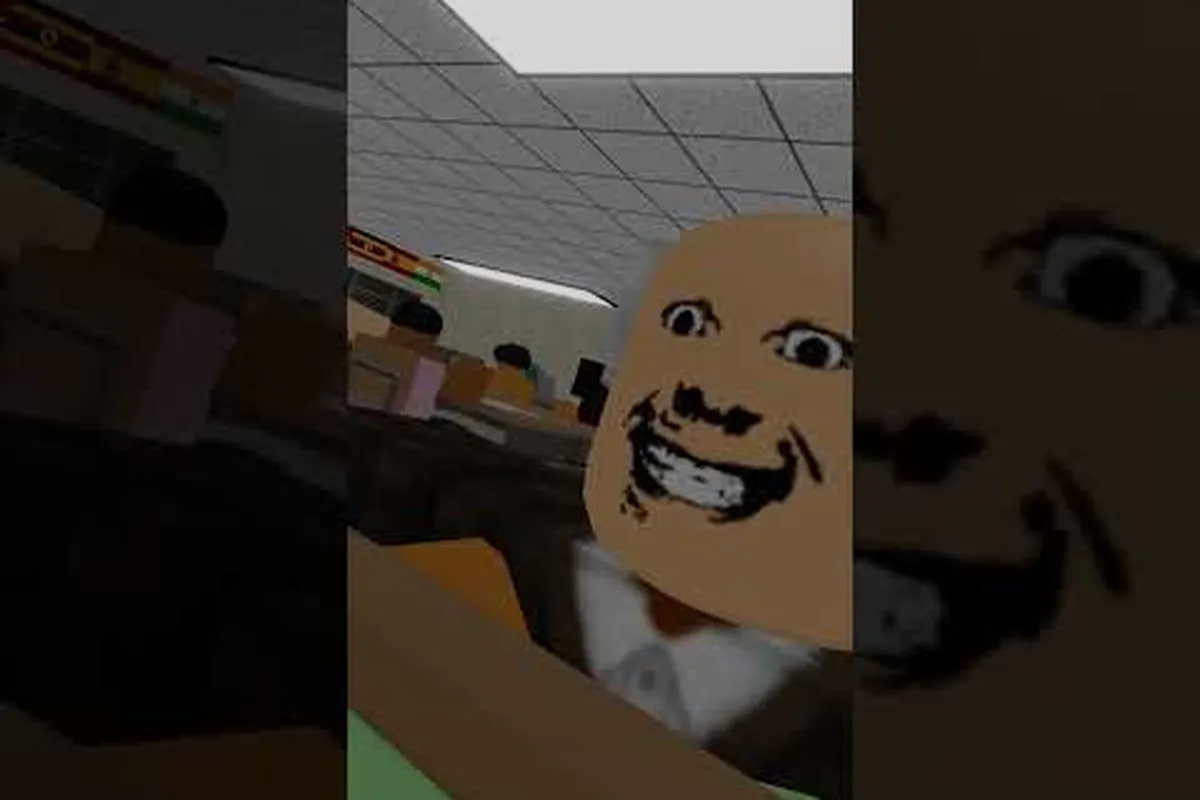
A single run of Cheating During Testing can feel either like a five-minute blur or a drawn-out endurance test, depending on which exam phases you understand and which you ignore. Knowing exactly how long each phase lasts, how many questions the teacher will throw at you, and when the anxiety meter ticks faster than usual is the difference between a clean A+ and a humiliating game over screen.
This guide breaks down the full length of a test in Cheating During Testing, walks through every cheating during testing exam phases segment, and shows how movement and seating choices stretch or compress the clock. The timers below come from community testing and may shift slightly between BETA patches, but the pacing rules have held steady since the early 2026 builds.
How Long Is a Full Test in Cheating During Testing
A typical exam in Cheating During Testing runs between 3 and 5 minutes of real-time play, broken into a pre-test lobby, an opening paper-distribution phase, a question-answering phase, and a final collection-and-grading phase. According to the official Cheating During Testing page on Roblox, the game is still labeled BETA, so individual phase lengths can vary by classroom, but the overall structure is consistent.
Phase Length at a Glance
| Phase | Approximate Length | What Happens | Failure Risk |
|---|---|---|---|
| Pre-test lobby / seating | 15-30 seconds | Pick a desk, wait for the teacher to settle | Low (snitch spawn check) |
| Paper distribution | 20-40 seconds | Teacher hands out the test, opens with instructions | Medium (teacher turn-around) |
| Question answering | 90-180 seconds | Work through 5-8 questions, cheat as needed | High (anxiety + snitch watch) |
| Collection & grading | 15-30 seconds | Papers are collected, grade is shown | Low (no new cheating window) |
The question-answering phase is where the bulk of your cheating during testing how long is a test planning lives, because every second of that 90-180 second window is split between answering, watching the teacher, watching snitches, and keeping your phone hidden.
Why the Clock Stretches and Shrinks
Several variables push a test toward the short or long end of that 5–40 minute range, including the number of exam phases the proctor must cycle through, the presence of game phases that split the room into competing groups, and how movement mechanics limit how far cheaters can pass notes. For example, a small 12-person classroom running only two exam phases with fixed seating typically finishes in 8–10 minutes, while a 40-seat hall combining multiple game phases, rotating seating mechanics, and extended movement mechanics between rounds can stretch past 25 minutes as the proctor waits for stragglers to settle into their best seat before each new phase begins.
-
Number of questions on the sheet — short pop-quizzes use 5 questions, full exams use 8, and the answer key only scrolls for the full set if you bought the better phone from the in-game shop.
-
Your seat's proximity to the teacher — back row seats give you more head-down time before the teacher turns, which functionally adds 5-10 extra seconds of safe cheating per cycle.
-
Snitch density in the room — more snitches mean more freezes, more dodging, and a longer effective test length even when the timer says the same thing.
-
Phone tier and answer loading speed — cheap phones take longer to pull up each answer, so the same test feels longer on a low-tier device.
Cheating During Testing Exam Phases in Detail
Every test in the game flows through the same four cheating during testing exam phases, and each one rewards a different rhythm. Veteran players treat them like a tempo map rather than a single block of time because each phase is a timed arena of cheating during testing seating mechanics and cheating during testing movement mechanics, where the best seat to choose directly shapes how long a test actually feels and how much risk you take on. Skipping a row too close to the proctor forces a longer, more cautious scan window, which can stretch the whole phase by seconds compared to a back-corner seat that buys line-of-sight cover.
Phase 1: Seating and Pre-Test Lobby
The timer starts the moment you enter the classroom, not when the bell rings, so the pre-test lobby phase is brutally short. You have about 15-30 seconds to pick a desk, watch which students spawn as snitches near the teacher's desk, and orient yourself toward the chalkboard or exit routes. Choosing the back-row corner typically gives the best line of sight for spotting snitch patrols, while front-row seats force you to act faster but let you eavesdrop on teacher dialogue for answer hints.
During this pre-test lobby window, observant players commonly watch for rapid question-skips, whispered prompt-sharing, and sudden phone-screen tilts — all key behaviors that signal cheating during testing and help you gauge how long the test will actually take once it begins, since collusive groups compress the normal phase duration by rushing through shared answer pools.
-
Scan the room for the snitch archetype — students with raised hands or the telltale "tell-tale" animation.
-
Pick a seat that puts a wall or a low-skill student between you and the nearest snitch.
-
Eat a snack from your inventory now, because anxiety only goes up from here.
If you ignore this phase and rush to a random desk, the next two minutes will punish you with snitch interruptions you could have avoided. The seating strategy guide on this site goes deeper into the corner-seat vs front-row trade-off, but the short version is that back-corner desks are the safest bet during this lobby.
Phase 2: Paper Distribution
Once the teacher takes roll, she turns to the front board and starts distributing papers. This phase lasts roughly 20-40 seconds and is your first real safe cheating window because the teacher is facing away from the class, giving you a brief opportunity to copy from a cheat sheet hidden on your lap or glance at a neighbor's pre-written answers before the test officially begins.
During paper distribution, you can quietly slide an extra blank answer sheet across your desk to a neighbor who forgot to print a backup copy, or trade multiple-choice answer keys with a pre-arranged signal partner. This phase typically lasts 2–3 minutes depending on class size, and seating mechanics dictate that students in the front row receive papers first while back-row seats—often cited as the best seat to choose for discreet movement—get their copies last, giving more time to scribble hidden notes under the desk.
-
Pull out your phone and start pre-loading the answer sheet.
-
Pop a snack to drop anxiety by a small chunk.
-
Glance at neighboring students' papers to see if the answer key is already open on their desk.
The main risk here is that some teachers do a half-turn to scan the room mid-distribution. If you see the teacher's head begin to rotate, slam the phone down before the animation finishes. The full half-turn is about 1.5 seconds, so timing is tight but learnable.
Phase 3: Question Answering
This is the heart of the test and the longest cheating during testing game phase, running 90-180 seconds depending on the exam variant. You are working through 5-8 questions while the teacher cycles between writing on the board, scanning the room, and (in some classrooms) walking the aisles.
A useful mental model is to break the Phase 3 question-answering block into discrete per-question cycles of roughly 45 to 90 seconds each, depending on difficulty tier. Within each cycle, the first 5 seconds should be reserved for visual scanning of the answers grid, the next 20 to 60 seconds for active reading, and the final 10 to 15 seconds for seating-mechanics repositioning, answer selection, and any movement-mechanics triggers (e.g., swapping a tile or blocking a neighbor's line of sight). Tracking these cycles against the phase timer is the most reliable way to estimate how long is a test from the inside, and it also exposes cheating opportunities such as pre-reading answers during an adjacent player's scan window or using best seat to choose geometry to peek at a higher-indexed answer before the cycle officially begins.
| Cycle Step | Approximate Time | Action |
|---|---|---|
| Read question | 3-5 seconds | Identify which answer key tab to open |
| Watch teacher | 1-2 seconds | Confirm teacher is facing away |
| Pull out phone | 0.5 seconds | Open the answer sheet app |
| Match answer | 2-4 seconds | Read the answer, commit it to memory |
| Hide phone | 0.5 seconds | Stash the phone before the teacher turns |
| Write answer | 4-6 seconds | Pencil it onto the test paper |
| Eat snack (optional) | 1 second | Reset anxiety if it climbed |
That cycle repeats 5-8 times, which is why the answering phase dominates the test length. Players who skip the watch-teacher step and just hold the phone out the whole time usually fail within one or two cycles because the teacher's scan animation is faster than most people expect.
Phase 4: Collection and Grading
The final phase is short — about 15-30 seconds — and the teacher walks the rows collecting papers. There is no new cheating opportunity here, but you can still lose the run if your anxiety meter maxes out before the paper leaves your desk.
Once collection finishes, the grade rolls in. A clean A+ requires zero snitch flags, an anxiety score under 30%, and a correct-answer rate of at least 90%. If you want the specifics on what each grade tier pays out, the how to get an A+ breakdown is worth reading next.
Movement Mechanics and How They Affect Test Length
The cheating during testing movement mechanics matter more than most beginners realize because every step you take burns a fraction of a second, and the teacher reads footsteps the moment you leave your desk. If you understand the movement system, you can shave 10-20 seconds off the test length without ever raising your cheating tempo.
Movement Speed and Stealth Trade-Offs
| Movement Mode | Speed Modifier | Noise Level | Best Use Case |
|---|---|---|---|
| Walking | 1.0x (baseline) | Quiet | Default during exam phases |
| Crouch-walk | 0.6x | Silent | Sneaking past snitches |
| Sprint | 1.8x | Loud | Only safe in pre-test lobby |
| Crawl under desk | 0.3x | Silent | Hiding after a near-miss |
Walking is the default and what the game expects you to use during the test. Sprinting inside the exam room is almost always a one-way ticket to a teacher turn-around, which means an automatic anxiety spike. Crouch-walking is your friend whenever a snitch is between you and your target seat, especially during seating and the rare moments you need to relocate mid-test.
Stamina and Anxiety Drain
Movement is not free. Every sprint tick drains a small amount of stamina, and once stamina hits zero, your character is forced into a slow walk for several seconds. During the question-answering phase, that forced walk often lines up with a teacher turn-around, so good players keep stamina above 50% the entire time.
Anxiety works the opposite way from stamina. The longer you stay still, the more it builds. A useful rule of thumb is to take at least one small movement action every 15 seconds during the exam — adjusting your seat, scratching your head, or shifting your paper — to bleed off anxiety without raising the teacher's suspicion.
Seating Mechanics and the Best Seat to Choose
The cheating during testing seating mechanics are the single biggest lever you can pull before the test even starts. The desk you pick determines your line of sight to the teacher, your distance from the nearest snitch, and how much head-down time you get per teacher cycle.
Seat Type Comparison
| Seat Type | Teacher Visibility | Snitch Density Nearby | Head-Down Window per Cycle | Best For |
|---|---|---|---|---|
| Front row, center | Very high | Low | 1-2 seconds | Risky all-A attempts |
| Front row, side | High | Medium | 2-3 seconds | Aggressive answer-stealers |
| Back row, center | Low | High | 4-5 seconds | Steady cheaters |
| Back row, corner | Low | Low | 5-7 seconds | Safest "best seat to choose" |
| Side wall (left/right) | Medium | Medium | 3-4 seconds | Balanced runners |
For most runs, the back row corner seat is the cheating during testing best seat to choose because it pairs the longest head-down window with the lowest snitch density. The trade-off is that you are farther from the teacher's desk, so collecting the test at the end takes an extra second or two of walking — which is a small price to pay for the safer answering window.
If you are running a coordinated multiplayer team, the multiplayer coordination guide explains how to spread your team across two corner seats so that one player can signal a teacher turn-around while the other cheats.
Seat-Specific Failure Modes
-
Front row, center — fails fast if the teacher does aisle walks, which is common in the harder classrooms.
-
Back row, center — fails when snitches spawn directly behind you, because they can see your phone screen without you noticing.
-
Side wall — fails when a snitch sits in the diagonally opposite corner and uses a "look-around" animation that catches your movement.
Players who want to push for a perfect run usually pick a back-corner seat and pre-bait the nearest snitch into seating far away during the lobby. If a snitch is locked to your row, swap desks during the pre-test lobby if a free one opens up — the 15-30 second lobby exists for exactly this reason.
Pacing Strategy: How to Stretch or Compress a Test
Once you know the phase lengths, the next step is to choose a pacing style that matches your goal, because each scoring band demands a different average speed across cheating during testing exam phases. A run that aims for a safe B+ looks very different from an all-A sprint, since the B+ line typically falls after Phase 3 (Practical Exam) and lets you linger on multiple-choice guessing, while the A cutoff at 95% requires clearing every MCQ before 60% of the timer drains and acing both essay seating questions in under 2 minutes each.
Conservative Pacing (Safe B+ Run)
-
Goal: finish the test with anxiety under 30% and zero snitch flags.
-
Cycle speed: slow, about 12-15 seconds per question.
-
Total test length: closer to the 4-5 minute upper bound.
-
Best seat: back row corner.
-
Phone tier: low or mid — speed is not the bottleneck when you are being careful.
Aggressive Pacing (A+ Sprint)
-
Goal: finish all questions in under 2 minutes, with the teacher never catching a peep.
-
Cycle speed: fast, about 6-8 seconds per question.
-
Total test length: closer to the 3-minute lower bound.
-
Best seat: side wall, where you can see both the teacher and the nearest snitch at the same time.
-
Phone tier: high — the better the answer-loading speed, the more aggressive cycles you can run.
Hybrid Pacing (Most Common)
Most players fall into a middle tempo that takes 3.5-4.5 minutes per test and lands in the A- to A range. The hybrid style eats a snack every 3-4 questions, walks instead of crouch-walks except when dodging snitches, and only sprints during the pre-test lobby.
Frequently Asked Questions
How long is a single test in Cheating During Testing?
A full test in Cheating During Testing takes about 3 to 5 minutes, with the question-answering phase lasting 90-180 seconds on its own. The exact length depends on the exam variant, your seat choice, and how many snitches spawn in your classroom, so plan for closer to 4 minutes on a first run.
What are the four cheating during testing exam phases?
The four exam phases are seating and lobby, paper distribution, question answering, and collection and grading. Each one has its own timer, risk profile, and best practices — the answering phase is by far the longest and the most important to optimize.
Does the best seat to choose change with phone tier?
Yes, slightly. Low-tier phones pair well with back-corner seats because you have more head-down time to compensate for slower answer loading. High-tier phones can afford side-wall seats because the faster app lets you cheat inside a tighter window, so the answer depends on how much credit you have spent on upgrades.
Do snitches make the test longer in cheating during testing game phases?
Snitches do not change the on-screen timer, but they add 2-5 seconds of dodge time per sighting, which stretches the effective length of a test. A room with four snitches can easily push a 3-minute test into the 4-5 minute range, which is why picking a seat away from snitch spawns is one of the strongest time-saving moves in the game.
How do movement mechanics affect total test time in cheating during testing how long is a test runs?
Sprinting and unnecessary repositioning inflate total test time by 10-20 seconds per run and raise your anxiety meter faster. Sticking to a walking default, using crouch-walk only when dodging snitches, and reserving sprint for the pre-test lobby will keep your runs close to the optimal 3-4 minute window without sacrificing safety.
Understanding the underlying test duration and pacing each question against the teacher's rotation clock ensures you complete every paper before the final bell tolls. To reinforce your survivability during high-pressure final minutes, review our game over screens breakdown to eliminate last-second panic mistakes.