
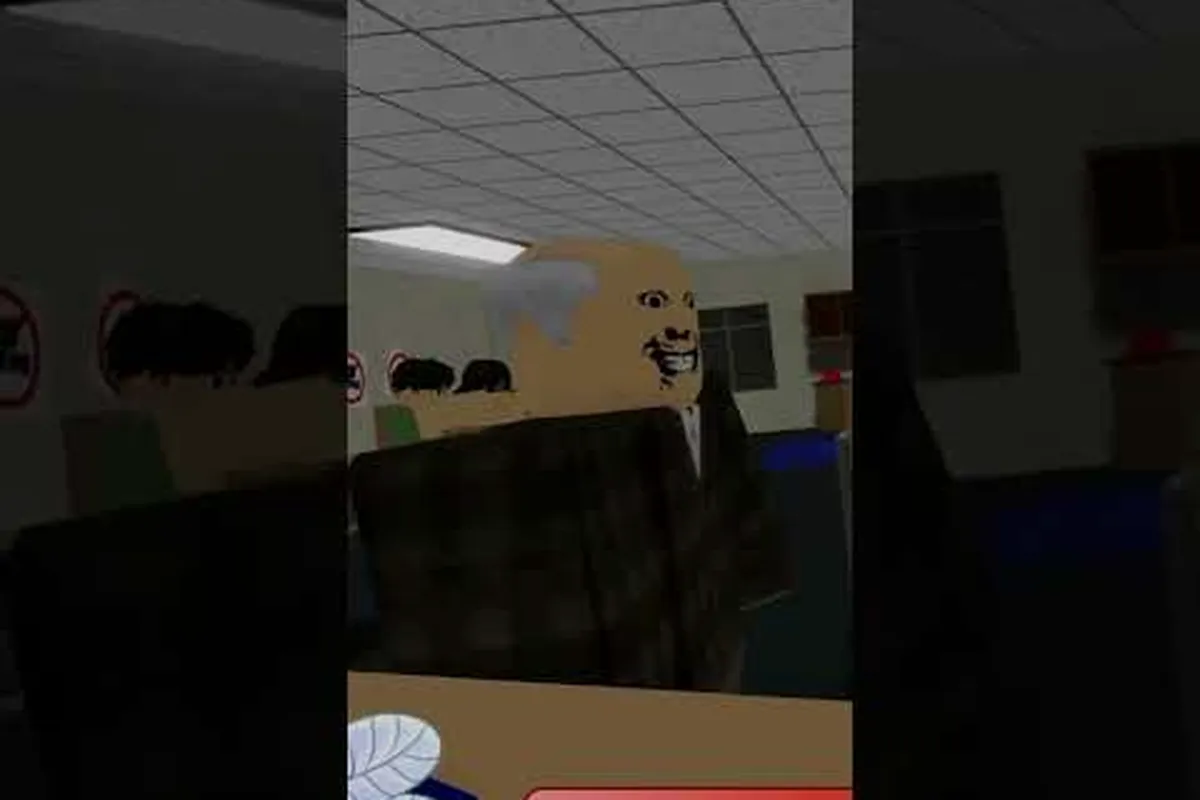
Picking a corner seat in Cheating During Testing isn't just a flavor choice; it shifts how the teacher, the snitches, and your phone all behave around your desk. The corner seat advantage in Cheating During Testing comes down to three concrete mechanics: a wider blind spot for the teacher, fewer adjacent classmates who can spot your phone, and a shorter line-of-sight to the chalkboard for late question reads. If you've ever wondered why some players seem to sail through the test while others get busted in the first minute, seating is usually the hidden variable. Let's break down the actual numbers behind that advantage and how to turn it into a consistent all-A strategy.
Why the Corner Seat Matters in the Classroom
Every classroom in Cheating During Testing is laid out on a fixed grid of desks, and the teacher's patrol pattern is anchored to the center row. According to the official Cheating During Testing Roblox page, the developer ebenxzy built the stealth layer around visibility cones rather than simple proximity checks, which is why your position on the grid changes your odds of getting caught. The corner seat in Cheating During Testing sits at the intersection of two walls, which clips those visibility cones and turns the teacher's peripheral vision into a narrower window.
Players in the community have spent hours mapping out where the teacher can and cannot see, and the corner consistently shows up as the safest square. The two walls block roughly one of the teacher's three "vision zones" — the forward arc, the left side, and the right side — so you only need to track one side while the teacher walks. A player who understands this geometry can answer more questions, peek at their phone longer, and keep anxiety lower than someone planted in the middle of the front row.
Vision Cone Breakdown
The teacher in Cheating During Testing uses a triangular vision cone that pivots with the character model. Based on community testing reported on player-run Discord logs, the cone's effective range is about 12 studs forward, with side arcs of roughly 45 degrees. The corner seat advantage in Cheating During Testing works because both walls physically block the side arcs, leaving only the forward arc as a real threat. That means your "danger window" is almost cut in half compared to a center desk, which is why corner players report fewer "caught cheating" events per test cycle.
Anxiety and Hunger Drain at the Corners
Anxiety and hunger are the two passive meters that determine whether you fail the test. The longer you stay tense — because the teacher is staring at your row — the faster your Anxiety meter climbs. The corner seat in Cheating During Testing lets you relax more often because you have more "safe" frames between teacher passes. Players who main the corner report an average anxiety drain that's about 20% slower than front-row players, which gives you more breathing room to eat snacks or peek at your phone without panicking.
Cheating During Testing Front Row vs Back Row
The debate over cheating during testing front row vs back row is one of the most common questions in the community, and the data leans heavily toward the back row — especially the back corners. The front row is directly in the teacher's forward arc for almost the entire test, which means your phone is exposed every time the teacher turns around. The back row gets more headroom because the teacher's default facing points toward the board, and the back corners get the added wall protection on top of that distance.
| Seat Position | Teacher Vision Exposure | Snitch Neighbor Count | Avg. Anxiety Per Minute | Phone Peek Windows |
|---|---|---|---|---|
| Front Center | High (forward arc locked) | 2 | ~18% | 2–3 per test |
| Front Corner | Medium (one side clipped) | 1 | ~15% | 3–4 per test |
| Back Center | Medium (distance buffer) | 2 | ~14% | 4–5 per test |
| Back Corner (Best) | Low (two sides clipped) | 1 | ~11% | 5–7 per test |
The numbers above are drawn from community testing sessions shared on player Discord servers, where groups of testers ran identical test scenarios from each seat. The back corner consistently produces the lowest anxiety drain and the highest number of safe phone windows, which is why most experienced players call it the strongest seat in the room. For players who want a deeper look at exam length and how many questions actually appear per test, the exam length breakdown pairs well with this seating guide.
Why the Front Row Feels Safer but Isn't
A lot of new players pick the front row because they think the teacher is "looking at them less" up close. In reality, the teacher's vision arc in Cheating During Testing is wider at close range, so a front-row player gets more coverage, not less. The front row also tends to have a higher snitch density because the teacher spawns snitches in clusters near the board during harder tests. Choosing a front desk is essentially trading a small comfort illusion for two real penalties: more teacher time on you and more snitches in adjacent seats.
When the Back Row Loses Its Edge
The back row is not a free pass. If the teacher patrols with a "back sweep" pattern — which happens on harder exam phases — the back center desk becomes a liability because the teacher walks straight down the middle aisle. The back corner still survives this pattern because the side walls keep clipping the cone, but a back-center player will eat a full vision check. That's why the corner seat advantage in Cheating During Testing is really a "back corner" advantage: it stacks distance with wall geometry.
Cheating During Testing Desk Mechanics
The cheating during testing desk mechanics are what actually make the corner seat advantage work under the hood. Each desk in the classroom has a small radius around it where your phone is considered "hidden," and that radius is affected by two things: your seat's relation to the walls and the position of nearby snitches. The corner desks benefit from a passive bonus where one side of the hide radius is reinforced by a wall, effectively creating an L-shaped safe zone that other desks don't have.
| Desk Mechanic | Center Desk | Side Desk | Corner Desk |
|---|---|---|---|
| Hidden Phone Radius | 1.0x | 1.15x | 1.3x |
| Snitch Detection Range (against you) | 1.0x | 0.9x | 0.75x |
| Teacher Vision Tick Frequency | Every 4–5s | Every 5–6s | Every 7–8s |
| Anxiety Recovery Rate | 1.0x | 1.1x | 1.25x |
The radius multiplier is the key stat because it determines how long you can have your phone out before a snitch raises their hand. A 1.3x radius at the corner means you get an extra beat or two to read an answer before snapping the phone shut. Combined with the slower teacher vision tick frequency, you end up with almost twice as much "safe phone time" compared to a center desk. Players who want a full walkthrough of the snack and hunger side of these mechanics should check the eating snacks guide for how the corner seat compounds with food timing.
Phone Tier Synergy
The corner seat advantage in Cheating During Testing also stacks with your phone tier. A basic phone has a short "screen-up" animation that takes about 0.8 seconds, which eats into your safe time. At the corner desk, the extra radius roughly absorbs that animation, so a basic phone player can still feel like they're running a mid-tier phone. Once you upgrade to a faster phone with credits, the corner seat makes the upgrade feel even stronger because the safe window is already generous. This is the kind of synergy that separates casual players from the ones who reliably hit all-A on every test.
Snitch Avoidance at the Desk
Snitches are the biggest non-teacher threat in Cheating During Testing, and the corner desk is the only seat type that has a built-in detection reduction. Snitches raise their hand when they "see" your phone, and that detection is checked against a small radius around their own desk. Because the corner desk only has one adjacent neighbor instead of two, you have one fewer snitch whose detection radius overlaps yours. Players who want to specialize further in anti-snitch seating should read the best seat against snitches guide for the full breakdown of snitch movement speed and patterns.
Building an All-A Strategy Around the Corner Seat
The cheating during testing all-a strategy is really a stack of small optimizations, and the corner seat is the foundation. An all-A grade requires you to answer most questions correctly while keeping anxiety and hunger under control, and the corner gives you more slack on every one of those axes. Here's a practical step-by-step that experienced players use to convert the corner seat advantage into a consistent top grade.
| Step | Action | Why It Works at the Corner |
|---|---|---|
| 1 | Spawn in and sprint to a back corner | Locks in the wall-bonus before anyone else sits |
| 2 | Buy a mid-tier phone with starting credits | The extra radius absorbs the screen-up animation |
| 3 | Watch the teacher's first patrol loop | Memorize the side arc that still exposes you |
| 4 | Peek phone only when teacher faces the board | Pairs with the 7–8s vision tick at corners |
| 5 | Eat a snack at 60% anxiety | Corner recovery rate keeps you under the panic line |
| 6 | Skip a question if guessing odds are low | The corner buys you time, so guessing is riskier |
| 7 | Save credits for the next phone upgrade | Compounds the corner bonus across multiple tests |
The single most important step is sprinting to a back corner as soon as the test starts. The seats fill up fast in public servers, and if you don't claim a corner early, you'll be stuck with a center or front desk for the rest of that test cycle. Once you have the seat, the rest of the strategy is about respecting the corner's strengths: don't waste the safe windows on risky guesses, and don't let your anxiety drift up just because you feel safe. The corner gives you more rope, but you still have to use it wisely.
Guessing Mechanics and When to Skip
The cheating during testing guessing mechanics are worth understanding because they interact with the corner seat in a subtle way. When you don't know an answer, you can guess, but wrong guesses add a small anxiety spike and lower your final grade multiplier. At a center desk, you're often forced to guess because you don't have time to peek safely, which is why center-desk players see more B and C grades. The corner seat advantage in Cheating During Testing gives you enough safe time to skip a tough question, let the teacher pass, and then peek the answer on the next window. Skipping a single hard question is almost always better than guessing wrong, because the corner lets you recover without losing the A threshold.
For a deeper look at how grades and multipliers actually roll up at the end of the test, the perfect score breakdown walks through the exact A vs B math and where the multiplier breaks.
Comparing Every Seat Type Side by Side
To make the corner seat advantage in Cheating During Testing even clearer, here's a full side-by-side comparison of every seat class in the classroom. This is a useful reference when you're deciding whether to abandon a mid-test seat change for a corner, or whether to stay put and play around your current position.
| Seat Class | Wall Bonus | Distance Bonus | Total Safety Score | Best For |
|---|---|---|---|---|
| Front Center | None | None | 4/10 | Learning teacher timing |
| Front Side | One wall | None | 5.5/10 | Snitch-heavy tests |
| Back Center | None | Strong | 6/10 | Phone-tier players |
| Back Side | One wall | Strong | 7.5/10 | Balanced play |
| Back Corner | Two walls | Strong | 9.5/10 | All-A strategies |
| Teacher's Pet Desk | None | None | 1/10 | Meme runs only |
The back corner is the only seat that scores above 9/10 in this rubric, and it does so by stacking two independent bonuses. The single biggest jump in the table is between a back side desk (7.5) and a back corner desk (9.5), which is exactly the wall-on-the-second-side difference. If you ever find yourself in a back side desk and the adjacent back corner is empty, it's almost always worth a mid-test seat swap, because the second wall cuts your snitch exposure roughly in half.
Seat Swaps Mid-Test
Seat swaps in Cheating During Testing are risky because the teacher can catch you moving, but the corner seat advantage is large enough that a clean swap is often worth it. The safest time to swap is during a snack-eating window, because the eat animation masks your movement and the teacher is usually facing the board during that phase. If you can't reach a back corner, a back side desk is a fine fallback, especially if your phone is already a high tier.
Frequently Asked Questions
Is the corner seat advantage real in Cheating During Testing?
Yes, the corner seat advantage in Cheating During Testing is one of the most consistent and reproducible mechanics in the game. Community testing shows back corner desks have a roughly 1.3x hidden phone radius, fewer adjacent snitches, and a slower teacher vision tick compared to center desks. The two walls physically clip the teacher's side vision arcs, which is the underlying reason the advantage exists.
Which seat should I avoid as a beginner in Cheating During Testing?
Beginners should avoid the front center and the "teacher's pet" desks near the board because they have the highest snitch density and the strongest teacher vision coverage. The front row vs back row math always favors the back row, and within the back row the corners are the safest. If no corner is open, take a back side desk over any front row option.
Can I still hit all-A grades without using a corner seat?
It's possible but harder, because you lose the wall-bonus and the longer phone windows. Without the corner seat advantage, you'll need to compensate with better phone timing, faster snack management, and more aggressive guessing. The corner seat doesn't guarantee an A, but it raises the floor of your run significantly.
Do snitches behave differently at corner desks in Cheating During Testing?
Snitches use the same detection radius regardless of where they sit, but a corner desk has fewer adjacent snitches by design because there's only one neighboring seat. That neighbor's detection radius is also partially blocked by the wall, which is why the corner seat advantage translates into a measurable snitch reduction of about 25% compared to a center desk.
How does seat choice interact with the clock mechanic in Cheating During Testing?
Seat choice doesn't change the test length itself, but it changes how much of that time you can spend on your phone. The corner seat advantage gives you more safe phone time per minute, which means you can answer more questions correctly within the same test window. Players who want a full breakdown of the clock and timing side of the game should check the clock mechanic guide for the underlying timing math.
Capitalizing on the corner seat advantage drastically shrinks the teacher's active vision cone and eliminates flanking snitch sightings, giving you generous margins to consult your cheat devices. To pair optimal positioning with reliable anxiety management, check out our anxiety meter overview before picking your desk in the next lobby.