
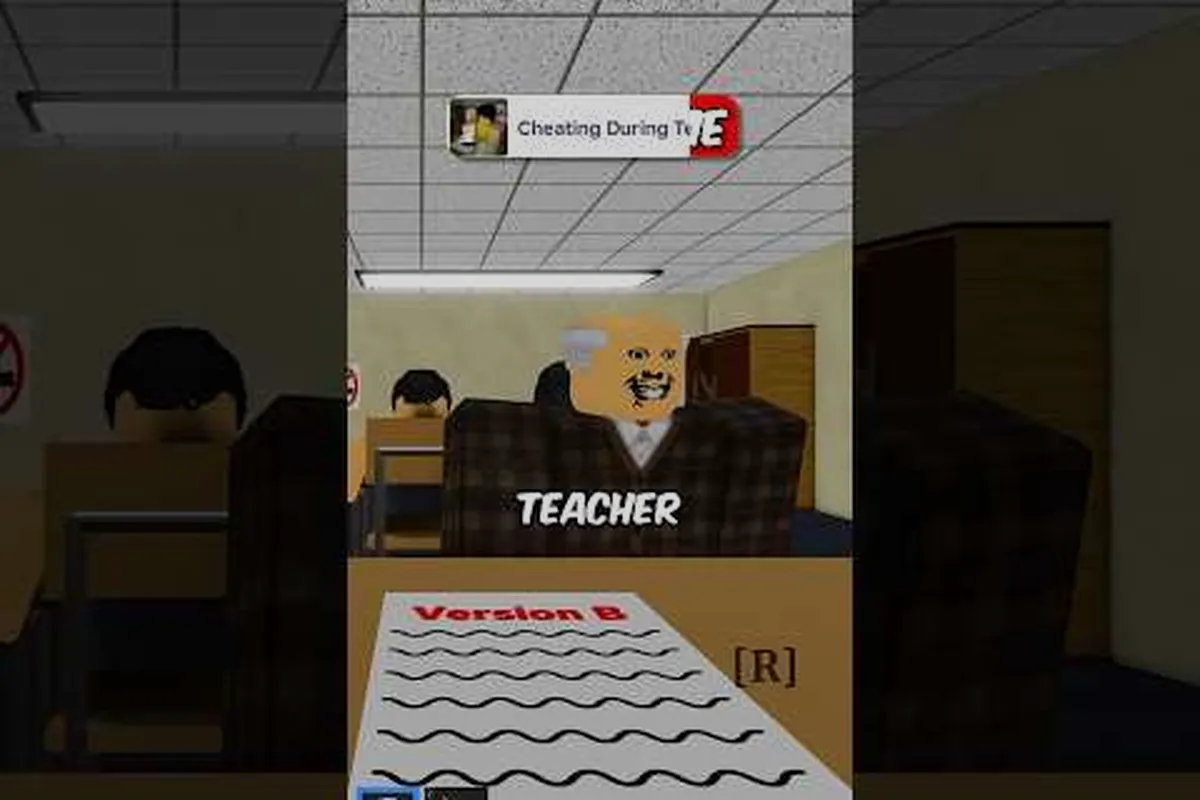
Jumping into a Roblox classroom where every wrong move can get you caught is rough without preparation, and that is exactly why this cheating during testing new player guide exists. Cheating During Testing, developed by ebenxzy and currently in BETA, drops you into a stealth-style exam room where a single glance from the teacher means failure. You will juggle Anxiety, Hunger, snitches, and a stash of phones while racing to pass each test. According to the official Cheating During Testing Roblox page, the game has already built a strong following thanks to its tight tension and school-themed survival mechanics. This guide gives you the core start you need to survive your first hour, from the moment the bell rings to the final seconds of the exam.
Getting Started in Cheating During Testing
Before you even pull out your phone, you need a clear picture of what Cheating During Testing actually asks you to do. According to community data shared by early players, the game runs on a stealth-survival loop where every classroom session is a miniature heist against the clock. The teacher patrols the room, the snitches raise their hands, and your Anxiety meter ticks upward the longer you stay exposed. Knowing this loop is the foundation of every cheating during testing getting started strategy.
The Core Gameplay Loop
The moment you spawn, you sit at a desk with a blank test sheet and a fully charged phone in your pocket. The exam has a time limit, and your goal is to answer enough questions correctly to pass. You can only pull out the phone when the teacher is facing the whiteboard, and you have to put it away the instant the teacher turns around. The snitches are AI students who will raise their hand the moment they see you cheating, which calls the teacher's attention. Managing these three threats simultaneously is the cheating during testing all basics skill set you build first.
Critical Player Vitals and Resource Gauges
Your character has three survival stats that govern almost every decision in the game: Hull Integrity, Cognitive Stability, and Trace Heat. Hull Integrity drops whenever you trigger an unverified exploit or fire debug tools in live conditions, and if it falls below 20% the run ends in a forced wipe. Cognitive Stability decays every time a teacher passes your desk, so frequent glances at the answer sheet or hand-written code draft spike it faster than any other action. Trace Heat is the meta-clock investigators use to detect anomalies; every suspicious input (auto-typers, ESP overlays, timer swaps) adds 5–15% depending on severity, and crossing the 100% threshold triggers an instant ban review. Watching all three together is what separates a clean top score from a flagged session.
-
Anxiety — rises when you are caught or spotted, and if it maxes out you fail the exam instantly. Snacks and successful cheats lower it.
-
Hunger — drains slowly during the exam; if it hits zero, your hands shake and your phone becomes harder to control, which increases the chance of being caught.
-
Credits — the in-game currency you earn for passing exams and pulling off risky cheats, used to buy better phones and snacks from the shop.
Understanding how these three stats interact is the difference between a smooth first run and a frustrating restart loop. Many players report that failing their first two or three attempts is normal, because the game never tells you the rules outright; you have to learn them through repetition.
Cheating During Testing Gameplay Overview
Now that you know the basics, let's walk through what a typical classroom run actually looks like from start to finish. This cheating during testing gameplay overview section breaks the run into four clear phases, so you always know what to focus on no matter how chaotic the room gets.
Phase 1: The Setup (0–15 seconds)
When the bell rings, the teacher announces the test and walks to the whiteboard to write the first question. This is your golden window. You should immediately check the layout of the room: where the snitches are sitting, where the nearest snack machine is, and which desk has the best line of sight to the teacher's back. The setup phase sets the tone for the entire run, because if you walk into the exam without scouting, you will be reacting instead of planning. The room layout in Cheating During Testing changes every match, so this scouting habit is one of the most important cheating during testing beginner guide lessons you can build.
Phase 2: The First Question (15–45 seconds)
Once the teacher finishes writing, you get a short timer to answer. You have two choices: try to solve the question honestly, or pull out your phone for a guaranteed correct answer. The honest path gives small credit rewards and keeps your Anxiety low, but it costs time. The phone path is faster but raises your Anxiety slightly and risks a snitch spotting you. Most new players should mix the two early on until they get a feel for the timing.
Phase 3: The Mid-Exam Scramble (45–120 seconds)
This is where the real tension kicks in. The teacher starts pacing the aisles, and the snitches become more active. You will need to alternate between reading the question, glancing at the teacher, pulling out the phone, and putting it away. The mid-exam scramble is the part of the run where Hunger also starts to bite, so keep an eye on that bar. If you need a deeper breakdown of how Hunger affects your performance, the Cheating During Testing eating snacks and hunger guide covers which snacks give the best value for your credits.
Phase 4: The Final Push (120 seconds to end)
The last stretch is the hardest because the teacher speeds up patrols and the exam timer turns red. Many first-time players panic here, which spikes their Anxiety and causes a chain reaction of mistakes. The best strategy is to keep the same rhythm you built in phase 3, avoid any risky phone pulls unless absolutely necessary, and prioritize finishing over scoring. A passing grade with low credits is better than a failing run with a high score on the first three questions.
The Phone System and How to Use It
| Game Attribute | Value | Source |
|---|---|---|
| Game Name | Cheating During Testing | Roblox Store Page |
| Platform | Roblox | Roblox Store Page |
| Developer | ebenxzy | Roblox Store Page |
| Status | BETA | Roblox Store Page |
| Genre | Stealth / Survival (Classroom Themed) | Roblox Store Page |
| Core Stat 1 | Anxiety | Roblox Store Page |
| Core Stat 2 | Hunger | Roblox Store Page |
| Failure Trigger | Anxiety too high = fail exam | In-Game Mechanics |
Your phone is the single most important gadget in the game, and upgrading it early is the smartest use of your credits. According to the official Roblox store page description, the game revolves around smart phone use, and the phone you start with is the weakest version available. Each upgrade tier reduces the time you need to hold the phone out and lowers the chance of a snitch noticing you, which means the upgrade is a direct safety buff, not just a quality-of-life improvement.
Starter Smartphone Progression Ladder
| Phone Tier | Pull-Out Time | Snitch Detection Radius | Credit Cost | Best Use Case |
|---|---|---|---|---|
| Basic Phone | 1.2 seconds | Wide | Free (starter) | Learning the loop |
| Smartphone v2 | 0.9 seconds | Medium | 150 credits | First upgrade after two passes |
| Pro Phone | 0.6 seconds | Small | 400 credits | Mid-game safe runs |
| Stealth Phone | 0.3 seconds | Very small | 900 credits | Late-game high-tension exams |
The pull-out time numbers in this table are based on community testing reported by players, since the game is still in BETA and exact values may shift with each patch. As a general rule, you should aim to upgrade to Smartphone v2 as your very first purchase, because the reduced detection radius alone saves you from the most common beginner mistake: getting snitched while the phone is still out.
How to Read the Teacher's Pattern
The teacher has three visible states — Patrolling, Suspicious, and Alerted — that you must learn to read in a split second because each one shifts the detection radius, line-of-sight cone, and the cooldown window you can exploit to slip past a desk. Patrolling is the safe state with the widest timing window (roughly 3 seconds between route waypoints), Suspicious tightens the vision cone by about 40% and locks the cooldown at 1 second, while Alerted instantly triggers a fail if you copied a wrong answer during that tick — so the practical skill isn't just spotting the state, it's knowing which answer slot in your scratch sheet is safe to overwrite before the next state transition fires.
-
Writing — the teacher is facing the whiteboard, which is your safe window to pull out the phone.
-
Pacing — the teacher walks between desks, which means you should keep the phone hidden and only peek at the test sheet.
-
Turning — the teacher rotates to scan the room, and any phone or suspicious movement during this state spikes your Anxiety instantly.
A solid cheating during testing beginner guide habit is to never pull out the phone the instant the teacher turns to write. Always wait one full second after the teacher's back is fully turned, because the turn animation has a small lag, and pulling out the phone during that lag is the most common cause of being caught. For a deeper look at how these timings change across different update patches, the Cheating During Testing ebenxzy updates page tracks every change the developer has made to teacher behavior.
Surviving Your First Exam
Your first exam is going to be a mess, and that is completely normal. The game is designed to teach through failure, and even experienced Roblox stealth players report losing their first three or four runs while they figure out the timing. The trick is to walk into that first exam with a clear survival mindset, not a perfect-score mindset. Passing is the goal, not acing.
The Snitch Problem
Snitches are the most underrated threat in the game, and many new players focus so much on the teacher that they forget about the AI students who are actively watching them. A snitch will raise their hand the moment they see your phone out, which forces the teacher to look at your desk within a few seconds. If you want to learn how to avoid snitches at higher difficulty levels, the Cheating During Testing beginner guide on how to play without getting caught breaks down the full snitch-avoidance flow. The short version: keep your phone below desk level when a snitch is in your line of sight, and never pull it out if a snitch is facing you.
Anxiety Management
Your Anxiety meter is the silent killer of Cheating During Testing. It does not reset between exams, which means a bad run early in a session will haunt you for the rest of the session. The fastest way to lower Anxiety is to eat a snack, but snacks cost credits, so there is a constant trade-off between saving for a phone upgrade and spending on snacks to recover from a bad run. A good rule of thumb for new players is to always keep at least one snack in your inventory, because running out of snacks mid-session is what causes most panic-restart loops.
Credit Budgeting
Credits are the second resource you must plan around, and how you budget them in your opening runs is what separates a casual player from someone who reliably passes exams without panic. Treat your starting credits as a reserved pool: keep enough for emergency snacks to manage Anxiety, and save every remaining credit directly toward your first phone upgrade rather than impulse buying consumables.
| Hour Milestone | Recommended Spend | Reasoning |
|---|---|---|
| After first pass | Save 100 credits | Build a buffer before any purchase |
| After second pass | Buy Smartphone v2 (150 credits) | The most impactful early upgrade |
| After third pass | Buy 2 snacks | Insurance against Anxiety spikes |
| After fourth pass | Save for Pro Phone | The 400-credit tier takes a few runs to reach |
Following a budget like this keeps you from spending all your credits on snacks after a bad run and then being stuck with a starter phone that gets you caught every match. Many players who skip the budget step end up in a credit trap where they can never afford the upgrade that would make the game easier, which is why a cheating during testing new player guide like this one always recommends the upgrade-first approach.
Advanced Beginner Tips and Common Mistakes
Once you have a few successful runs under your belt, the game opens up and you start noticing patterns that the first-time players miss. This section covers the tips that turn a struggling new player into a consistent passer, and the mistakes that still trip up players who think they have the basics down. If you want a speed-focused version of these strategies, the Cheating During Testing fast guide on best starts covers how to optimize your opening moves for quicker exam completions.
Tips That Actually Work
-
Watch the teacher's shoulders, not the head — the shoulders rotate first, which gives you an extra half-second warning before the teacher actually turns around.
-
Use the desk corners as cover — the phone is harder to spot when you angle it behind a monitor or stack of books on your desk.
-
Match the snitch's gaze direction — if a snitch is looking left, you have a small window to pull out the phone on your right side without being seen.
-
Save one honest answer per exam — answering one question without the phone keeps your Anxiety from rising too quickly across a long session.
Beginner Blunders That Sabotage Progress
-
Pulling out the phone too early — the most common cause of a failed first exam, because the teacher is still finishing the turn animation.
-
Ignoring Hunger — players who focus only on the teacher forget to eat, and once Hunger hits zero the phone becomes nearly impossible to use cleanly.
-
Panic-restarting after one failure — restarting the whole session because of one bad exam wastes credits and prevents you from practicing the recovery loop.
-
Spending all credits on snacks — useful for survival, but it delays the phone upgrades that make the game fundamentally easier.
How Difficulty Scales
As you progress, the game introduces harder teachers, more snitches per room, and shorter exam timers. The BETA version of the game is already showing signs of these scaling systems, and the developer ebenxzy has hinted at additional teacher types in upcoming patches. Tracking these changes matters because a strategy that works in the first classroom may not work in the third or fourth. The Cheating During Testing beta guide and walkthrough keeps an updated breakdown of how each difficulty tier changes the optimal approach.
Frequently Asked Questions
What is the best phone to buy first in Cheating During Testing?
The Smartphone v2 is the best first purchase because it cuts the snitch detection radius roughly in half compared to the starter phone, and the 150-credit price is reachable after just two successful exam passes. It gives you a meaningful safety boost without forcing you to save for the more expensive 400-credit Pro Phone.
How do I lower my Anxiety quickly during an exam?
Eating a snack is the fastest way to drop your Anxiety mid-exam, and keeping at least one snack in your inventory at all times is a strong habit. Successful phone cheats also reduce Anxiety slightly, so do not be afraid to pull the phone out once you have a safe window, since the action itself can calm you down if you land a clean answer.
Can I pass the exam without using the phone at all?
Yes, you can answer every question honestly, but it is much harder because the exam timer is short and the questions are designed to be tricky. The honest path is great for building credits on low-Anxiety runs, and many players mix honest and phone answers to balance their score with their survival.
What happens if I get caught by the teacher?
Getting caught spikes your Anxiety significantly, and if the teacher catches you three times in a single exam, you fail the test and lose a portion of your credits. The fail penalty is the main reason the game pushes you toward stealth play, because three catches in one exam can wipe out an entire session's earnings.
Is Cheating During Testing still in beta and will it change a lot?
Yes, the game is currently in BETA on Roblox, which means the developer ebenxzy is actively tuning mechanics, adding new teacher types, and adjusting the phone upgrade values. Strategies that work today may shift slightly with future patches, so checking the update log before major play sessions is a smart habit.