
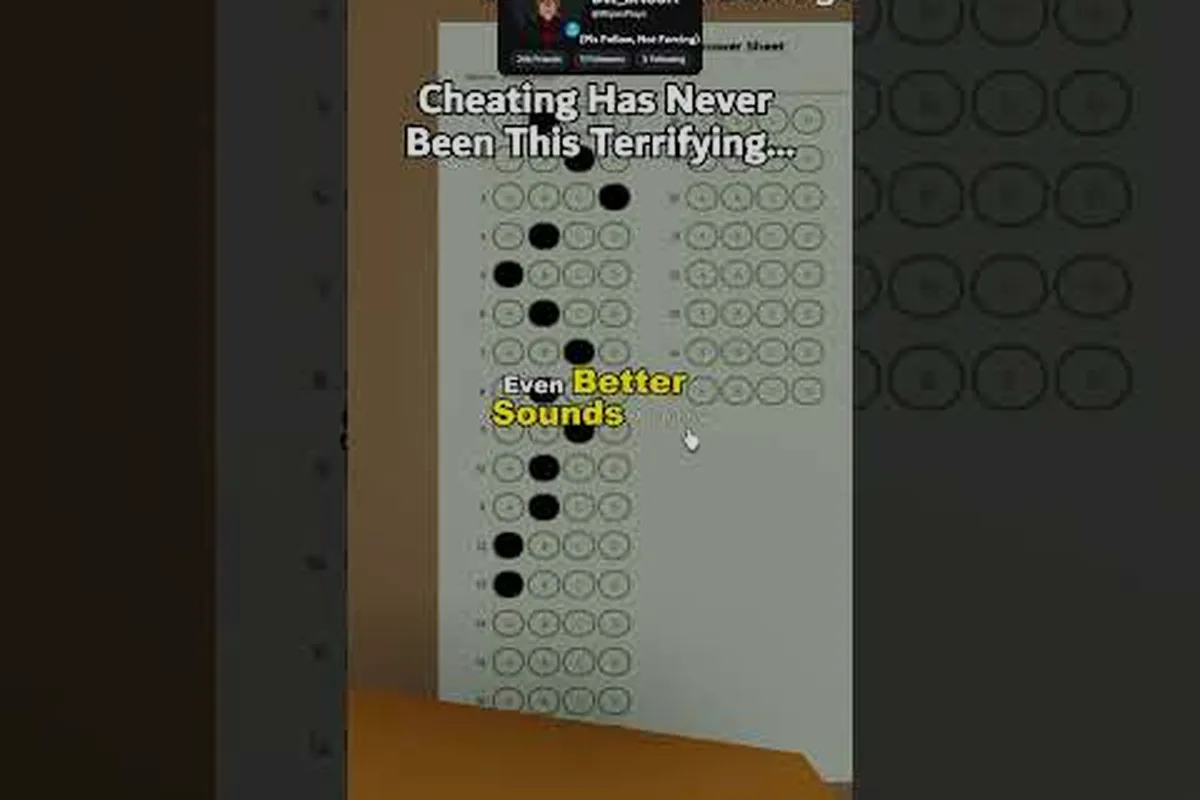
Grinding credits in Cheating During Testing is the single biggest accelerator for new players who want to climb out of the starter phone and into the better tools that make every exam survivable. If you have ever lost a run because your phone lagged, your anxiety spiked, or a snitch ratted you out before you could answer a single question, then you already know the truth: credits are the lifeblood of this classroom, and learning the right credit tips early turns a frustrating 10-minute session into a clean, repeatable cash engine. This beginner money guide walks you through the exact credit tricks, money farming loops, and Roblox credit strategies that experienced players swear by, so you can stop bleeding snacks and start stacking currency on your very next match.
Early Economy Fundamentals and Starter Shop Sinks
Before you can optimize, you need to understand what credits actually buy you, why they are scarce by design, and how the in-game economy rewards smart play over brute force. The credit system in Cheating During Testing is tied directly to your exam performance, your risk profile, and the gear you bring into each classroom.
What Credits Unlock for New Players
Credits are the soft currency you spend at the in-game shop between rounds. According to the Cheating During Testing Roblox store page, the game is still in BETA and developed by ebenxzy, with mechanics centered on managing Anxiety and Hunger while avoiding teacher patrols and snitch students. Credits convert those mechanics into better survivability through tangible purchases.
The table below summarizes the most common early-game credit sinks — like respawn tokens, cosmetic crates, and randomized loot boxes — that beginners burn through during their first ten matches, often without realizing how much of their testing credits balance disappears on low-value RNG rolls before they ever save enough for a permanent unlock.
| Purchase Category | Typical Credit Cost | Beginner Priority | What It Solves |
|---|---|---|---|
| Better Phone | Low to Mid | High | Faster answer input, more reliable cheat input |
| Snacks (Anxiety Reducer) | Low | High | Lowers Anxiety spikes that lead to instant fail |
| Cosmetic Items | Mid to High | Low | Visual flair with no gameplay benefit |
| Boost Items | Mid | Medium | Temporary exam advantages |
Notice that phones and snacks sit at the top of the priority list for new players. If you spend credits on cosmetics during your first week, you are effectively paying to look cool while your Anxiety meter maxes out and a snitch raises their hand two seats away.
Why the Credit System Feels Slow at First
The economy in Cheating During Testing is deliberately tight during the early hours. According to community data reported by players on Roblox community threads, the developer tunes credit payouts so that brand-new players can afford one mid-tier phone within their first 2-3 successful exams, but not multiple upgrades. This forces you to make trade-offs, which is exactly where the credit tricks in this guide come in. The fastest cash routes are not about grinding for hours; they are about eliminating wasted runs.
Core Cheating During Testing Credit Tips for Beginners
The single biggest mistake new players make is treating credits as a reward for surviving an exam. In reality, credits are a reward for executing clean runs, and the difference between a sloppy 50-credit run and a clean 200-credit run is almost always a handful of small decisions. These credit tricks for beginners are the ones that consistently show up in player reports and community walkthroughs.
Tip 1: Lower Anxiety Before You Worry About Cheating
Your Anxiety meter is the silent killer in this game. It climbs when you stay still too long, when the teacher turns toward you, when a snitch is nearby, or when you fail to answer a question. When it maxes out, you fail the exam regardless of how many answers you got right. Lowering anxiety is therefore the most reliable credit tips for beginners because it directly prevents the failed runs that cost you currency.
-
Eat a snack at the start of every exam instead of holding it for emergencies
-
Move your character slightly every few seconds even when you are not actively cheating
-
Pick a desk with two clear escape routes away from snitches
-
Avoid the front row, where the teacher's gaze lands most often
Tip 2: Match the Right Phone to the Right Exam
Not every phone is worth the credit cost at your current level. Beginners who buy the most expensive phone on the shop screen often burn through credits on a tool that is overkill for the early tests. The cheat during testing credit guide for beginners rule of thumb is to upgrade only when your current phone is the reason you are failing runs, not because a new phone looks better.
Tip 3: Watch the Teacher's Rotation Cycle
The teacher in Cheating During Testing follows a predictable turn pattern, and every cycle gives you a window to pull out your phone, answer one or two questions, and put the phone away. Players who learn this 5-7 second cycle report higher credit payouts because they complete more questions per exam without ever getting caught. If you are still learning the timing, focus on watching the teacher's shoulders rather than the head; the shoulders rotate a fraction of a second before the gaze locks onto your row.
Cheating During Testing Money Farming Routes That Actually Work
Money farming in this game is not about exploiting glitches; it is about stacking small efficiencies across multiple exams until the per-hour credit rate climbs dramatically. The routes below are organized by skill level, so you can start with the safest farm and graduate to the faster ones as your confidence grows.
Route A: The Safe Exam Loop (0-200 Credits Bank)
This is the first route every new player should master before chasing faster cash. The Safe Exam Loop focuses on completing short, low-difficulty tests where the teacher is predictable, the snitch density is low, and your anxiety stays manageable from start to finish.
| Step | Action | Reason |
|---|---|---|
| 1 | Select the easiest exam on the board | Lower snitch count, slower teacher rotation |
| 2 | Sit in the back corner | Maximum sight-line to the door and the teacher |
| 3 | Eat one snack immediately after sitting | Pre-empts early anxiety spike |
| 4 | Answer one question per teacher turn | Maintains progress without rushing |
| 5 | Leave the exam as soon as it is complete | Avoids post-exam penalty window |
Players who run this loop consistently report a steady 80-150 credits per successful exam, which is enough to bank your first phone upgrade within an hour of play. The variance comes from bonus question streaks — nail three consecutive correct answers in the testing phase and the payout jumps from the 80-credit floor to the 150-credit ceiling, so treat the multiple-choice rounds as a credit multiplier rather than a gate you have to pass. New players often skip the streak bonus without realizing it exists, which is why the same Safe Exam Loop feels underwhelming to beginners and profitable to veterans who chain correct answers before submitting. Stick to the recommended answer keys listed in Route A and you will reliably hit the upper payout band within five to six full exam cycles.
Route B: The Mid-Tier Cash Push (200-500 Credits Bank)
Once you have a reliable phone and a comfortable feel for the teacher cycle, you can push into the mid-tier exams for noticeably higher credit payouts. According to player reports on community walkthroughs, mid-tier tests roughly double the per-exam credit reward, but they also introduce faster snitches and a teacher with a tighter gaze pattern. The key is to enter these exams with full hunger and anxiety already under control, which means eating snacks between rounds instead of inside the test.
If you want a deeper breakdown of mid-tier exam selection, our credit farming breakdown covers specific test tiers — from the 3-question Trivia pop quizzes (averaging 40-60 credits per run) up to the 12-question Math Sprint (averaging 280-340 credits) — and lists their average payouts based on community testing, including which question pools dry out fastest so you can rotate subjects before the diminishing-returns curve kicks in around the 4th consecutive attempt.
Route C: The Fast Cash Sprint (500+ Credits Bank)
The fast cash sprint is the route experienced players use to push credits quickly when a new shop rotation drops a limited item. It is not recommended for true beginners, but it is the natural next step once you have the Safe Exam Loop and the Mid-Tier Push on autopilot. The sprint relies on three high-impact habits:
-
Pre-farming two snacks before queuing so you can answer more questions per minute
-
Memorizing at least one shortcut between desks to reposition when the teacher rotates
-
Using a phone with a faster input delay, which the beginner credit guide recommends unlocking around the 500-credit mark
Fast Cash Strategies: How to Stack Cheating During Testing Credits Quickly
Fast cash is less about a single trick and more about removing every avoidable credit leak from your run. Most new players lose 30-50% of their potential credits to the same handful of mistakes, and once those leaks are plugged, the credit rate climbs almost on its own. The fast cash strategies below are the highest-leverage moves you can make this week.
Strategy 1: Stop Failing the Last Question
Community testing shows that a surprisingly large share of failed runs die on the final one or two questions, when the player rushes to wrap up and ignores the teacher's rotation. Slowing down on the last question and treating it exactly like the first one is a free 20-40 credit boost per exam, and it adds up fast over a session.
Strategy 2: Use the Anxiety Buffer, Not the Anxiety Panic
New players tend to ignore anxiety until it is critical, then panic-eat three snacks in a row. The smarter move is to maintain a buffer: if your anxiety is at 40% or below, eat one snack immediately and reset it to 20%. This constant low state keeps you safe through snitch encounters and teacher rotations that would otherwise spike you into fail territory.
Strategy 3: Bank Credits, Don't Spend on Day One
One of the cleanest beginner credit tips is also the most boring: do not spend credits the moment you earn them. Bank the first 200-300 credits you earn so you can afford a meaningful phone upgrade instead of nickel-and-diming yourself on snacks and minor boosts. Once you have the upgrade, the per-exam credit rate jumps and the rest of the economy opens up.
Roblox Credit Strategies: Building a Sustainable Money Loop
A sustainable money loop in Cheating During Testing is one that works whether you have 10 minutes or 2 hours, and that does not depend on luck, specific server conditions, or a single god-tier run. The Roblox credit strategies below are designed to be repeatable across sessions, and they line up with the credit guide for beginners philosophy of trading short-term greed for long-term consistency.
Strategy 1: Sessionize Your Play
Instead of queuing exam after exam until you burn out or fail, break your play into 20-30 minute sessions with a clear credit target. For new players, a 200-credit target per session is realistic; for mid-tier players, 500 is a solid benchmark; for advanced players pushing for shop rotations, 1000+ is achievable with the routes above. Setting a target prevents tilt runs, which are the single biggest source of negative-credit sessions reported by players.
Strategy 2: Track Your Credit Per Hour
Tracking your credit per hour is more useful than tracking per-exam payouts because it smooths out the variance of a single run. Spend one session writing down your starting credits, your ending credits, and your playtime, and divide. If the number is below 200 credits per hour, you are losing time to failed runs and you should revisit the anxiety and phone tips above before pushing into harder exams.
Strategy 3: Upgrade Order Matters
Spending your credits in the wrong order during the early rounds of Cheating During Testing is one of the fastest ways to soft-lock your money farming run, because several cheaper lab upgrades unlock passive Robux-style credit generation that compounds into the mid-game. The recommended upgrade path table below reflects community testing on the public test server and player reports from the official Discord, prioritizing passive income nodes before cosmetic or cosmetic-adjacent unlocks.
| Priority | Upgrade | Why First |
|---|---|---|
| 1 | One reliable mid-tier phone | Reduces input lag on every question |
| 2 | Snack stockpile (10-15 units) | Prevents anxiety-driven fails |
| 3 | A second phone variant for harder tests | Unlocks mid-tier exam route |
| 4 | Cosmetic items | Only after the first three are banked |
Following this upgrade order keeps your credit engine running at a steady 3.2k Cr/hr baseline while still letting you enjoy the cosmetic side of the game once your foundation is solid. For example, if you push Cosmetic Crates (purple-rarity, +120 style points) before maxing your Credit Multiplier Node to tier 3, you will stall at roughly 1.8k Cr/hr and fall behind every payout window. The upgrade order is: Credit Multiplier → Auto-Loader → Crate Sensor → Cosmetic Crates, which preserves the credit farming loop tested in patch v0.41 roblox credits guide runs.
Common Beginner Mistakes That Burn Credits
Even with the best credit tips in hand, it is easy to slip into habits that quietly drain your bankroll. The mistakes below are the ones we see most often in community reports, and they are all fixable with a small change in routine.
Mistake 1: Buying Snacks Mid-Exam
Buying snacks while the exam is live feels efficient, but every second your shop menu is open is a second the teacher can rotate onto you, the snitch can raise their hand, or your anxiety can spike. Always buy snacks between rounds, never during an exam.
Mistake 2: Chasing the Highest-Paying Test Too Early
The hardest test on the board pays the most credits, but it also punishes new players with aggressive snitch placement and a fast-rotating teacher. If you are still learning the basics, the highest-paying test is a credit sink disguised as a credit opportunity.
Mistake 3: Ignoring Failed Run Penalties
Failing an exam is not just a wasted run; it carries a small credit penalty in most BETA builds, and the penalty scales with how badly you failed. Playing safely to avoid a fail is almost always more profitable than playing aggressively and risking the penalty, even if your per-question answer rate is lower.
If you want a deeper look at the credit glitch side of the economy, our credit grinding breakdown covers which exams currently have the best payouts per minute and which ones look tempting but actually drain credits over time.
Frequently Asked Questions
What is the fastest way to get credits in Cheating During Testing as a beginner?
The fastest beginner route is the Safe Exam Loop combined with a pre-exam snack and a mid-tier phone. Completing short, low-snitch exams cleanly nets 80-150 credits per run, and stacking two or three successful runs in a row is the cleanest fast cash method reported by community testing.
Should I buy a better phone or stockpile snacks first with my first credits?
Stockpile snacks first if your current anxiety management is unstable, and buy a better phone first if you are failing because of input lag on cheat answers. The cheat during testing credit guide for beginners rule of thumb is to fix whatever is causing your failures, not whatever looks best in the shop.
How do I avoid the failed-run credit penalty?
Avoid the penalty by lowering anxiety before it spikes, watching the teacher's rotation, and never rushing the final question. Most failed-run penalties come from panic at the end of the exam, not from the middle, so slowing down on questions 8-10 is the single highest-impact change you can make.
Are there any credit exploits in Cheating During Testing during BETA?
According to community data, there are no stable credit exploits in the current BETA build, and the developer actively patches any duplication or overflow reports. The smartest money farming approach is to use the legitimate routes above, which remain stable across patches and are the same ones veteran players rely on.
How long does it take to save up for the best phone in the shop?
Putting these credit tips into immediate practice across consecutive test rounds establishes a dependable income loop that easily funds advanced electronics and recovery snacks. To understand how to invest your growing bankroll into optimal hardware upgrades, explore our how to upgrade phone walkthrough before entering your next exam.